
Our Blog
Our blog’s inspiration comes from the work we do, the knowledge shared between our clients and us. It is dedicated to effective leadership.

Hopes & Dreams for 2024
Imagine an organisation focused to the point of being idealistic about serving its clients. All of its members (as they don’t define themselves by title, rank nor seniority, but rather as members of a Professional Community) hold a Deep Intent in common: “to enable...

Men have built too many walls and not enough bridges (Isaac Newton)
We are about to turn the page of 2023… The war is still raging in Ukraine, unspeakable horrors took and continue to take place in Israel and Palestine, tensions keep rising between China and the US, in Burma, the fighting continues, the genocide in Eastern Congo...

Disruptive Leaders Engage more than they Convince
Every time I show this extract from “Fierce Creatures”, starring British actor John Cleese, participants giggle, suggesting they already have been confronted to such a display of leadership by someone, awkwardly seeking to engage them. This is “Rollo Lee’s” (John...

How would you deal with him, if Higuita were part of your team?
Image courtesy of Pixabay. A.I. generated portrait of Albert Einstein René Higuita will forever remain a legend of football (soccer), like Bobby Charlton, Maradona, Messi, Pelé, Lev Yashin and several others. In the 90’s, Higuita was the goalkeeper of the best...

From a strong leader to no leader at all, to all leaders
The heroic leader carrying the team on their shoulders As far as I remember, all the movies, books and stories of my childhood were filled with heroic figures who, through their superior courage, determination, intelligence and strength had conquest an undisputed...

Benevolent & Demanding Leadership
Each time Nick McRoberts, a long time companion in the Enablers Journey and a brilliant conductor and composer or I (more modestly;) tell the story of those two highly respected artists (conductors Riccardo Muti and Leonard Bernstein), showing these tokens of their...

Your New Strategic Asset: Neurodiversity (by Charlotte Mader & Chris Parker)
What is the diversity of thinking within a company anyway? How can companies truly create the space for inclusion and acceptance of truly different ways of thinking? Dr Scott E. Page from the University of Michigan, and author of ‘The Diversity Bonus’, summarises his...

Our People are our Biggest (disposable…) Asset
High Tech companies have collectively laid 95’000 human beings off in 2022, following CNBC and, Tech-Co, claims that to date, the same have sent home another 84’479 people since the start of 2023. As 18th century French essayist, Philippe Néricault, used to say: “la...

Julio Arozarena: Competence, Generosity and Selflessness
Some of you may have noticed that the Enablers Community has been enriched by a lot of new members, recently. My pride is that we act in the field of Academy, Consultancy and Development and there isn’t a single academic, trainer nor consultant amongst us! But each...

Is real Change finally underway?
Those amongst you who know me, will confirm that I am a pessimistic idealist. I made mine the title of Intel founder’s book, Andy Grove: “Only the Paranoids Survive”… I nevertheless started the year 2023 with reasons to hope. One of the biggest question that we,...

“Business Leaders, tackle climate crisis or face sack!”
Last week, I shared the summary of the book, “Ten Game Changers for Disruptive Leaders” that we, at the Enablers Network, are about to start writing collectively. By the way, we are starting the process of identifying Arts, Business, Community and Sports Leaders...

10 Game Changers for Disruptive Leaders
When the Covid wave hit the planet, it rapidly became obvious that, on top of being a lethal health crisis which would kill millions of us (I lost my mentor and Godfather to it as well as a friend in Brazil), it would also have a disastrous impact on Economy and… it...

If Cognitive Diversity is strongly linked to Performance, why do we still drift into Polarisation?
I recently asked Chat GPT what it considered to be the best, between Cognitive Diversity and Polarisation. Its reply was: “Cognitive diversity refers to the variety of perspectives, knowledge, and abilities that different individuals bring to a group or organisation....

Have you ever tried Cognitive Diversity?
A recent article I wrote, “When the Road to Hell is paved with Good Intentions”, attracted a lot of interest and good suggestions, which reinforced my conviction that we are heading the 180° wrong way by focusing on Diversity at all cost, if we are serious about...

When the way to Hell is paved with good intentions…
… and the Highway Patrol becomes an active part of the problem… On my left sits Ji-Yong Kim. He has 88 subordinates at his disposal, to get the best done. Far from denying or tolerating differences between them, he encourages them! He is delighted when all of them...
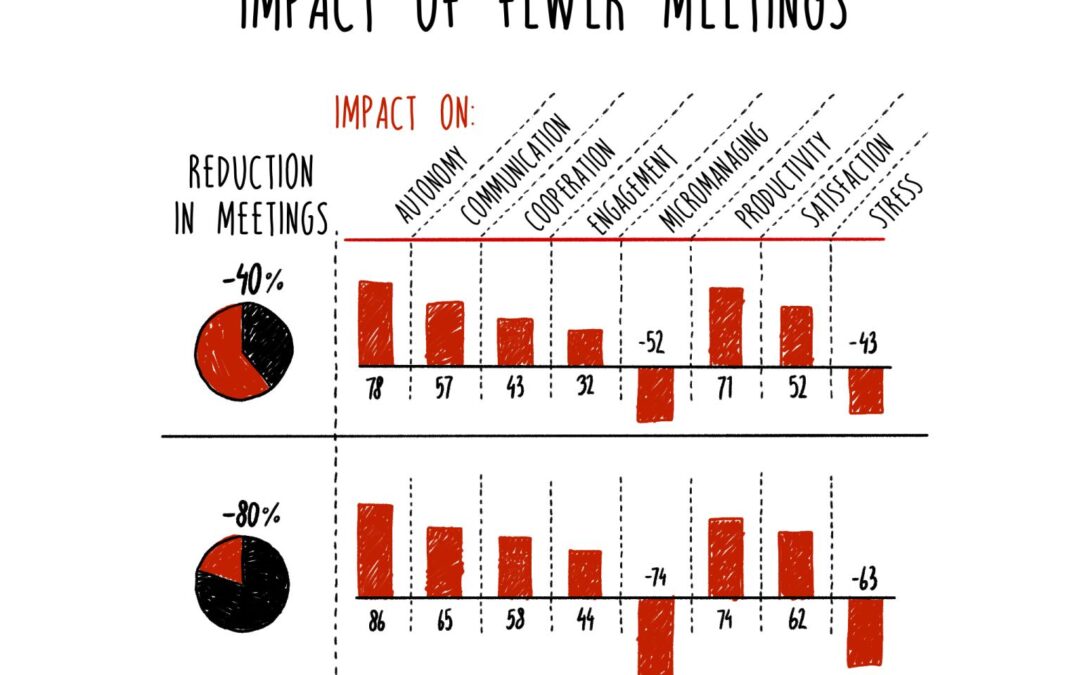
During Covid, Less Meeting Meant Higher Performance…
Yesterday, I came across an interesting post by Serge Golay, mentioning an article published by a consultancy with an inspiring name, Corporate Rebels. The post refers to a Harvard Business Review article, dated March 2022, mentioning a study concluding that, if the...
Bonding or Bridging?
Almost nine years ago, I wrote an article titled: “Bonding vs bridging: One of the biggest cause of value destruction”. I recommend you read it (again?) as a complement to this one. Bonding is an exclusion based reflex or strategy, inciting divisiveness and...

After the Great Resignation, the Quiet Quitting
Nine months ago, I wrote an article on the latest Leadership topic “à la mode”: The Great Resignation. If you want to be up to date nowadays, the new theme is “Quiet Quitting”. A Friend recently sent me an article of Gallup, relating to it. Whereas, in the Great...

Where do we think we’re going?
I came across this amazing picture of Brazilian Journalist, Lola Ferreira, showing far-right Brazilian President Bolsonaro's supporters, "meeting" underprivileged people in Rio de Janeiro on September 7th. It struck me as symbolising the huge challenge ahead of us. I...
Are we heading towards a World of Discovery or a World of Defensiveness?
I never would have thought, when social networks emerged, that they would be dreadful enablers of anti-democratic governments or of violent attempts to overthrow democracy. If they made some wonderful things possible, like the recent solidarity movement in Brazil, in...

The impact of the Disruption Economy on MBTI Preferences
This is the last of a series of articles on the M.B.T.I. (Myers-Briggs Type Indicator) preferences. The first was a reminder of the four Temperaments (SJ, SP, NT,NF)and the second was drawing connections between Leadership styles and M.B.T.I. preferences. This last...

Mobile: +41 79 435 1660
Skype: didiermarlier
5 Route du Village
1884 Villars-sur-Ollon
CH - Switzerland
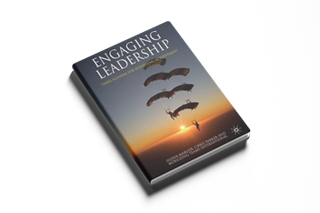
“Engaging Leadership” has been written for leaders who are about to engage their organisations in change."