
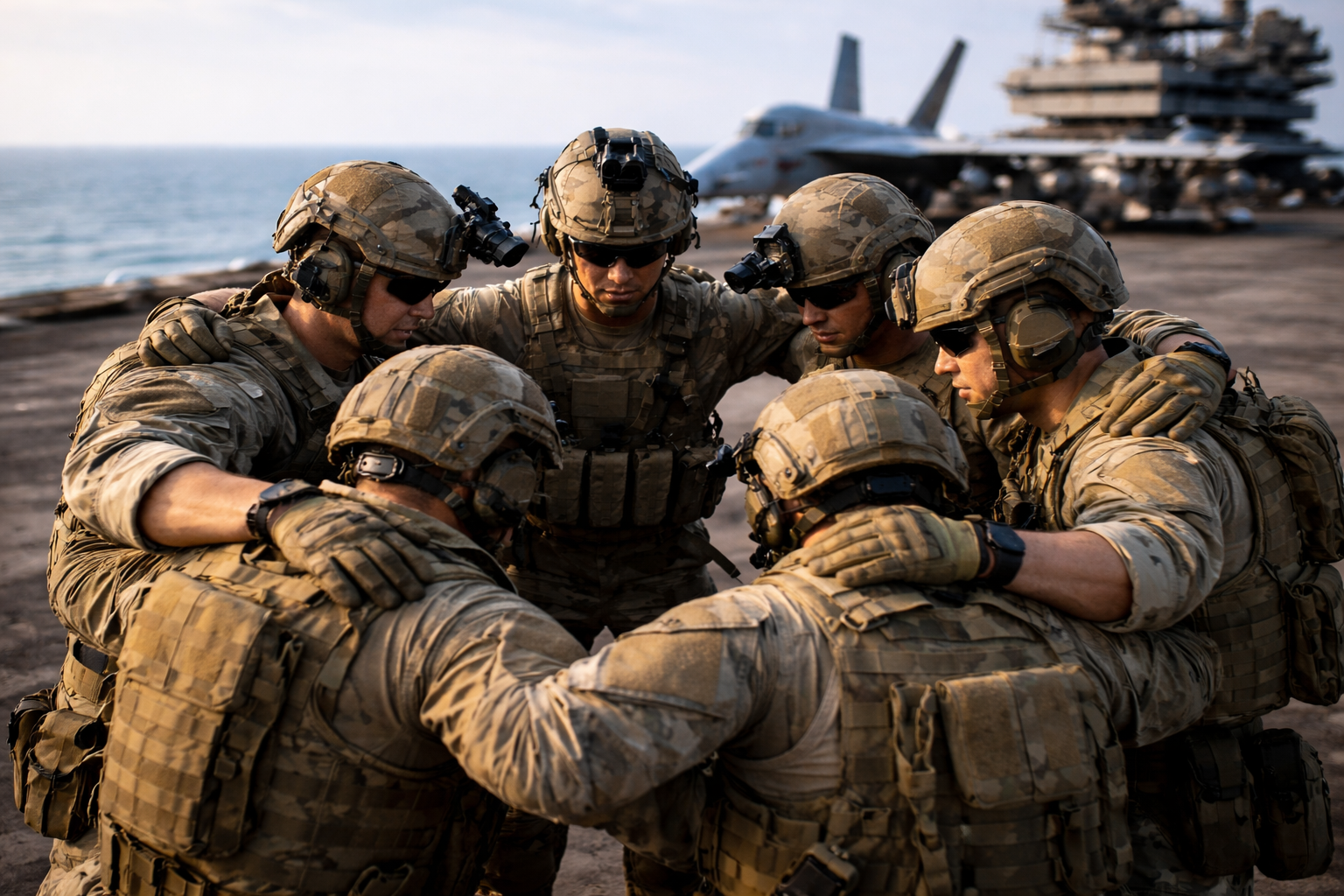
 Picture composed by A.I.
There are three “boxes” any business, military or sports leaders must tick, prior to engage their team into the “battlefield”:
- Logos, the (intellectual) Clarity test, as our brain’s first filter is about Rationality and Sense-making (Clarity, Meaning and, consequently, Ownership). Failing this initial step results in low motivation, sarcasm and cynicism. Engaging leaders ensure that the what is clear before launching their project, match or mission. Business leaders spend time and resources to prepare their annual convention, aiming at intellectually engaging their people into a new change or strategy. Likewise, no officer will launch the operation without a proper “Before Action Review” and no coach will let their team enter the pitch without a clear strategy or tactic, communicated to all.
- Ethos, the (behavioural) Credibility test, is less about the what than it is about the how (Behaviours, Culture, Values etc.). When interviewed after his double football titles with FC Basel, last year, coach Fabio Celestini claimed: “It is not about endlessly repeating “we need to win, we need to win” but, instead, agree on how we should win! (see 1’40’’)”. In the famous GE Objectives (did you reach the results) vs Values (how did you reach them) Matrix, Jack Welsh (who couldn’t be suspected of being an idealist or dreamer) ensures that both Logos (results) and Ethos (values) are taken into account.
- Pathos the (emotional) Conviction test, which is about moving from Intention to Action and this, following neurosciences “guru”, Prof. Antonio Damasio, happens when Emotions (Pathos or Why) support Rationale (Logos). But, concretely, how do Business, Military and Sports leaders trigger the Pathos lever?
A simple, impactful, although sometimes a bit surprising or uncomfortable way is to create an “Emotional check-in” ritual before jumping to action.
What is a ritual of Emotional check-in?
An Emotional Check-In is a short, structured moment at the start of a game, meeting, or mission where each team member briefly shares their current emotional state. Its objective is not therapy. It is used to:
- Reduce “emotional noise”: When people carry stress, frustration, or doubts silently, it drains working memory, attention, and decision quality. Sharing it briefly allows them to acknowledge it and refocus.
- Create Psychological Safety: When teammates feel safe to speak honestly, they collaborate faster, correct errors sooner, and adapt more effectively — essential in sport, business, or operations.
- Help the leader understand team’s emotional/mental readiness: A coach, CEO, or mission leader can immediately see who is focused, who needs support, who is distracted, who has surplus energy etc.
- Build trust and cohesion: Teams that “hear” each other before acting move with more coherence and mutual awareness.
- Prevent conflict escalation: If someone enters a meeting already irritated, naming the emotion reduces the risk that it spills into group dynamics.
How to run an “Emotional Check-In Ritual”?
- The leader sets the tone: “Let’s take 10 minutes to check in. One sentence each. Where are you emotionally right now?” In some cases (when the team is new to it or feels uncomfortable), the leader should start so as to help people calibrate. Should the leader not show vulnerability, not lower his/her guard, expect the rest of the process to be insignificant. Should the leader truly demonstrate vulnerability, the process will trigger a positive Pathos.
- Go for a short, simple sharing: Each person speaks in a single sentence, for example: I feel a bit tired but focused or, I am stressed about home, but I’m here and ready, or I am excited and confident or I am distracted, but committed to giving my best.”
- No interrupting, no judging: The team simply listens.
- The Leader closes the ritual, by refocusing: “Thank you. We’re showing up with honesty. Now let’s engage with full clarity.”
The Emotional Check-In ritual can easily be forgotten, by “action freaks” or by those uncomfortable with sharing their deeper inner state or temporary vulnerability. In my humble sports and business experience, it is worth pushing for it though.
Enjoy your leadership Journey
0 Comments