

NeoQuimica Stadium Corinthians Sao-Paulo
Why is there a dark spot, in the immaculate Corinthians 49’082 white seats stadium?
In a recent football game of the Brazilian Championship, the team of Corinthians was welcoming one of its arch-rivals, Palmeiras. People who dare calling themselves “supporters”, hurled racist insults at the Palmeiras goaltender. When the hosts, as well as the local police, ran their inquiry, they were unable to identify the author of the criminal offence. Since the club refused to let go of this behaviour, which they labelled as totally against Corinthians value, the club chose to use Pathos, not to convince supporters (every supporter is aware of the potentially very negative consequences for the club they support, if targeting an opponent with racist abuse during a match) but they chose to engage their supporters through a powerful symbolic move: They spectacularly removed the seat, symbolically allocated to the criminal fan, for ever and left in its place a message saying: ““Racism has no place here. And it never will.”
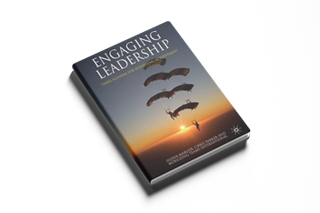
Pathos you said? Logos, Ethos and Pathos are terms that were used by Greek philosopher, Aristotle. Ex-IMD Faculty, Chris Parker, and I, made them the cornerstone of our book, “Engaging Leadership”. Its key message is that convincing and ordering rarely engage people into change, whereas a blend of rationale (Logos), behavioural integrity (Ethos) and emotions (Pathos) will.
If Logos (intellectual & cognitive lever – the Clarity test) is rather straightforward for rational people and cultures (engineers, researchers and other bright minds such as lawyers, auditors or management consultants), if Ethos (behavioural & values lever – the Credibility test) is a matter of intellectual integrity and exemplarity, Pathos (emotions & passion lever – the Communion test) is more counter-intuitive. Many of the leaders we speak with, agree that Logos, Ethos and Pathos complement each other but struggle to understand how to concretely engage their people and organisation through Pathos.
The three “tools” here below allow leaders to connect directly with their people’s “emotional brain” without running the risk of remaining blocked at the “rational brain” level. The distinction between emotional and rational brain is based on the work of Professor and neurologist, Antonio Damasio, Descartes’ Error: Emotion, Reason, and the Human Brain, who demonstrated that human decisions are deeply anchored in our emotional system, even for those of us describing themselves as purely rational. 2002 Nobel Prize of Economics Laureate, Daniel Kahneman goes into a similar direction with his system 1 & system 2 framework. Those three tools are:
- Stories (story telling): storytelling is well documented as an emotional access gate. Researchers such as Paul Zak demonstrated that good narratives trigger oxytocin (love hormone), increasing empathy, connection and memory.
- Metaphors, which have been researched in cognitive linguistic by Lakoff & Johnson, (Metaphors We Live By) for whom they are far more than stylistic ornaments as they structure the way we perceive a situation
- Symbolic gestures and symbols are less formalised in scientific literature but are well known to anthropology, social psychology and organisational rituals. And the illustration which inspired me with this article, belongs to this latter category.
But what does it mean, to use the counter-intuitive lever of Pathos?
Back to our own business leadership challenge, when aiming at engaging our people through Aristotle’s “magic trio”:
- Logos: is about rationale, conviction and intellectual integrity
- Ethos: is about exemplarity and walking the talk of our values and stated “Leadership Model”
- Pathos: is about entering the field of passion and emotions. It is counter-intuitive and can be dangerous to manipulate, precisely if we fail to be authentic and use Pathos to… manipulate our people (as many political leaders are known to do or have been).
And that is exactly where leaders need to be clear about when using Pathos : Amazon & Co (Ford, Goldman Sachs, Google, Harley-Davidson, Meta, Nike, Walmart etc.) have adopted impactful and powerful policies, in a highly visible and public manner… just to back down, once the political winds blew strong against those values they might never have fully embraced. And that is what Corinthians chose not to do: Extirpating the “racist’s seat” in an irreversible and permanent manner, has been seen by all as authentic engagement.
Here below is the short Corinthians clip summarising their reaction…
https://www.youtube.com/watch?v=bKKI2tSnJ0Q
… as well as a short article in English, about the case
Enjoy your Leadership Journey
Very good article Didier! Congratulations!
Muito obrigado, Carlos, mais uma vez a inspiração vem do seu pais que amo tanto!
Excellent article Didier, “comme d’habitude”.
Merci Carlos, ton soutien est TRES apprécié. Abraço fraterno
A thought-provoking article! What struck me most is the reminder that leading through Pathos is not about emotional displays or persuasion techniques—it is about creating authentic human connection.
This article also resonated with me because it highlights something I’ve observed repeatedly in transformation and change initiatives: understanding is not the same as commitment.
As leaders, we often invest significant effort in explaining the logic behind a decision, assuming that if people understand the rationale, they will naturally support the change. Yet experience shows that even the most compelling business case can fall flat when people do not feel seen, heard, or connected to the journey.
What I take from this article is that Pathos is not about appealing to emotions in a manipulative way; it is about acknowledging that organizations are human systems. Trust, belonging, purpose, and connection play a critical role in whether people embrace or resist change.
For me, leading through Pathos means creating the conditions for genuine dialogue, listening as much as speaking, and helping people find their own place in the story of change.
Thank you dear Didier for articulating such an important dimension of leadership that is often overlooked in favor of strategy, processes, and metrics 🙂
Thank you, once again, for an outstanding summary and underlining of the key point, dear Sara. Corinthians response to a racist “supporter” is calling to values and emotions, in a structured and Logos manner. You are spot on.
Have a peaceful week end
Didier